Financial emergencies rarely happen at convenient times. An unexpected car repair, medical bill, overdue utility payment or temporary loss of income can leave people struggling to cover their everyday expenses. When savings are limited and traditional banks cannot provide immediate financial assistance, payday loans may appear to be an accessible borrowing option.
Payday loans are designed to provide short-term financial relief, typically until the borrower’s next paycheck. Many payday lenders operate online, allowing consumers to apply for funding without visiting a physical lending location. However, while these loans offer convenience and relatively simple eligibility requirements, they can also carry considerably higher borrowing costs than traditional personal loans.
Understanding how payday loans work, what lenders require and how repayment affects your finances is essential before submitting an application.
What Are Payday Loans?
A payday loan is a small, short-term loan generally intended to cover expenses until the borrower receives their next paycheck or another regular source of income. Unlike conventional bank loans, which may have repayment periods extending over several years, traditional payday loans are often due within two to four weeks.
Payday loans are generally unsecured, meaning borrowers do not have to provide property, vehicles or other valuable assets as collateral. Instead, lenders typically evaluate applicants based on their income, banking information, identity and ability to repay.
Loan amounts commonly range from $100 to $1,000, although borrowing limits vary depending on the lender and applicable state regulations.
Some of the most common reasons people consider payday loans include:
- Unexpected medical and dental expenses
- Emergency vehicle repairs
- Overdue electricity, water and utility bills
- Temporary income shortages
- Urgent household expenses
- Unexpected travel costs
- Essential groceries and living expenses
- Emergency home repairs
These loans are intended for temporary financial emergencies rather than long-term financial needs or recurring monthly expenses.
How Do Payday Loans Work?
The payday lending process is generally straightforward. Borrowers submit an application containing personal, employment and financial information. The lender evaluates the application and determines whether the applicant meets its lending requirements.
If approved, the borrower receives a loan agreement outlining the amount borrowed, applicable fees, annual percentage rate, repayment date and other lending conditions.
Once the borrower accepts the agreement, the lender may transfer the funds electronically into the borrower’s bank account. Some storefront lenders also provide cash or other payment methods.
On the agreed repayment date, the borrower is responsible for repaying the original loan amount together with any applicable interest and fees.
For example, someone borrowing $500 from a lender charging $15 for every $100 borrowed would owe $575 on the repayment date. Although the $75 borrowing fee may initially appear manageable, it represents an annual percentage rate of approximately 391% when calculated over a 14-day borrowing period.
This is one of the main reasons payday loans should be approached carefully.
Online Payday Loans
Online payday loans have become a common alternative to traditional storefront lending. Instead of traveling to a physical location, borrowers can complete an application using a computer, smartphone or tablet.
Online lenders generally use electronic application systems to verify information, evaluate eligibility and communicate lending decisions. Depending on the provider, applicants may receive a decision relatively quickly.
The convenience of online borrowing makes it particularly attractive to consumers who work irregular hours, live in rural areas or need access to financial assistance outside normal banking hours.
Online payday loan applications are often available around the clock. However, submitting an application at night or during a weekend does not necessarily mean funds will be available immediately. Bank processing times, verification requirements and lender operating hours can affect funding speed.
Borrowers should also verify that an online lender is legally authorized to provide loans in their state before sharing sensitive personal or financial information.
Payday Loans for Bad Credit
One reason payday loans attract considerable interest is that some lenders accept applications from individuals with poor credit histories.
Traditional banks and credit unions often rely heavily on credit scores when evaluating personal loan applications. Applicants with previous late payments, defaults, collections or limited credit histories may struggle to qualify for conventional financing.
Payday lenders may place greater emphasis on current income and banking activity than on traditional credit scores.
This does not mean that every applicant with bad credit will qualify. Lenders may still review alternative credit reports, outstanding debts, previous borrowing activity and other financial information.
Borrowers with poor credit should pay particular attention to loan costs. Having fewer borrowing options can make consumers more vulnerable to expensive lending agreements and unfavorable repayment terms.
Improving creditworthiness over time may provide access to considerably more affordable financial products.
No Credit Check Payday Loans
Many consumers search for payday loans with no credit check because they are concerned that their credit history will prevent them from obtaining financial assistance.
Some payday lenders do not perform traditional hard credit inquiries through the three major credit reporting agencies: Experian, Equifax and TransUnion. Instead, they may use alternative consumer reporting services, income verification systems or bank account information.
The phrase “no credit check” does not necessarily mean that a lender performs no financial checks whatsoever.
Responsible lenders generally need to establish that applicants meet certain eligibility requirements. These checks may include identity verification, income confirmation, banking history and previous short-term borrowing activity.
Consumers should be cautious of lenders advertising guaranteed approval without any meaningful verification process. Such claims may be misleading and, in some cases, associated with fraudulent lending operations.
Same-Day Payday Loans
Same-day payday loans are marketed toward borrowers who need money quickly. These loans may provide access to funds on the same business day when an application is approved, verification is completed and the lender’s payment systems support rapid transfers.
Several factors influence how quickly borrowers receive their money, including the time of application, the lender’s processing procedures, bank transfer schedules and whether additional documentation is required.
Applications submitted early during normal business hours may have a better chance of being processed that day. Applications submitted during weekends, public holidays or after processing deadlines may take longer.
Same-day funding is never guaranteed simply because a lender advertises fast loans. Borrowers should confirm the expected funding timeframe before accepting an agreement.
How Much Money Can You Borrow With a Payday Loan?
Payday loan amounts vary considerably between lenders and states. Some providers specialize in relatively small loans, while others offer larger amounts where regulations permit.
The following table illustrates potential borrowing costs using an example fee of $15 per $100 borrowed.
| Loan amount | Example borrowing fee | Total repayment |
|---|---|---|
| $100 | $15 | $115 |
| $200 | $30 | $230 |
| $300 | $45 | $345 |
| $400 | $60 | $460 |
| $500 | $75 | $575 |
| $750 | $112.50 | $862.50 |
| $1,000 | $150 | $1,150 |
These figures are illustrative rather than actual lending offers. Fees, borrowing limits and repayment periods depend on the lender and state law.
Borrowing more money than necessary increases repayment obligations and may create additional financial pressure when the next paycheck arrives.
How Much Do Payday Loans Cost?
Payday loans are generally among the most expensive forms of consumer borrowing. Unlike many traditional personal loans, payday lenders frequently express borrowing costs as a fixed fee for every $100 borrowed.
A fee of $15 per $100 may sound relatively inexpensive when viewed as a one-time charge. However, because the repayment period is short, the annualized cost can be substantial.
Payday loan cost calculator
Estimate the total repayment and annualized borrowing cost.Loan amount
$500
Fee per $100 borrowed
$15Repayment period
14 days
Total repayment
$575.00
Estimated APR
391.1%
Principal: $500.00
Fees: $75.00
Illustrative calculation assuming a single repayment and no additional charges.
Additional expenses may arise when borrowers fail to repay their loans on time. Depending on state regulations and the lending agreement, these expenses may include late payment fees, returned payment charges, collection costs and renewal fees.
Reading the complete loan agreement is essential to understanding the actual cost of borrowing.
Payday Loan Requirements
Although eligibility requirements differ between lenders, payday loan applicants are generally required to be at least 18 years old, have a regular source of income, possess valid identification and maintain an eligible bank account.
Applicants may also need to provide a Social Security number, residential address, telephone number and employment information.
Some lenders accept income from sources other than traditional employment. Social Security benefits, retirement income, disability payments and certain other recurring income sources may be considered, depending on the lender’s policies.
Meeting the basic eligibility requirements does not automatically guarantee approval. Individual financial circumstances, existing debts and state lending restrictions may influence the final decision.
How to Apply for a Payday Loan Online
Applying for an online payday loan typically involves completing an electronic application form. Before beginning, borrowers should determine exactly how much money they need and whether they can afford to repay the loan within the required timeframe.
The application usually requests personal information, contact details, income information and banking details. Some lenders may require supporting documents, while others use electronic verification services.
After reviewing the application, the lender may provide a loan offer containing the proposed borrowing amount and repayment conditions.
Applicants should carefully examine the total repayment amount rather than focusing exclusively on the amount they will receive. They should also check whether the lender charges additional fees for late payments, failed withdrawals or other circumstances.
Accepting a loan agreement creates a financial obligation. Borrowers should never feel pressured to sign an agreement before fully understanding its terms.
Direct Payday Lenders vs. Loan Matching Services
When searching for payday loans online, consumers frequently encounter two different types of websites: direct lenders and loan matching services.
A direct lender is a company that originates loans itself. The borrower applies directly to the financial institution responsible for providing the funds and administering the loan.
A loan matching service, sometimes called a lending marketplace or loan connection service, collects application information and attempts to connect borrowers with participating lenders.
| Feature | Direct lender | Loan matching service |
|---|---|---|
| Provides loan funds | Yes | Generally no |
| Determines loan terms | Yes | Participating lender |
| Access to multiple lenders | Usually no | Often yes |
| Processes applications | Directly | Refers or distributes applications |
| Final approval | Direct lender | Participating lender |
| Data sharing | Depends on policy | May involve multiple partners |
Loan matching services can simplify the process of finding potential lenders, particularly for applicants who have difficulty qualifying elsewhere. However, submitting information through these platforms may result in personal information being shared with multiple companies.
Consumers should review privacy policies carefully before completing an application.
Payday Loans vs. Personal Loans
Payday loans and personal loans both provide access to borrowed money, but their structures differ considerably.
Personal loans generally offer longer repayment periods, larger borrowing amounts and potentially lower annual percentage rates. Instead of requiring borrowers to repay the entire balance on their next payday, personal loans typically involve scheduled monthly payments.
Payday loans are designed around smaller amounts and shorter repayment periods.
| Feature | Payday loans | Traditional personal loans |
|---|---|---|
| Typical loan amount | $100–$1,000 | $1,000–$50,000 or more |
| Repayment period | Usually 2–4 weeks | Several months to several years |
| Borrowing cost | Generally very high | Generally lower |
| Credit requirements | May be more flexible | Varies by lender |
| Repayment structure | Often a single payment | Monthly installments |
| Collateral | Usually not required | Usually not required |
| Funding speed | Potentially same day | Same day to several business days |
A personal loan may be more suitable for individuals who need additional time to repay borrowed money. However, approval requirements and available interest rates depend on the applicant’s financial profile.
Payday Loans vs. Installment Loans
Installment loans allow borrowers to repay their debt through multiple scheduled payments rather than one lump sum.
For individuals who cannot afford to repay several hundred dollars from a single paycheck, an installment loan may provide a more manageable repayment structure.
However, installment loans are not automatically inexpensive. Some short-term installment lenders charge extremely high interest rates, and extended repayment periods can result in significant total borrowing costs.
The most important consideration is the total amount repaid over the entire loan term.
A loan with smaller monthly payments may appear affordable while ultimately costing considerably more than another borrowing option with a shorter repayment period.
Advantages and Disadvantages of Payday Loans
Payday loans have certain practical characteristics that explain why consumers consider them during financial emergencies. Nevertheless, their disadvantages can significantly outweigh their convenience.
| Advantages | Disadvantages |
|---|---|
| Relatively simple application process | Extremely high potential APR |
| Potentially fast funding | Short repayment deadlines |
| Some lenders consider bad-credit applicants | Risk of repeated borrowing |
| Generally no collateral required | Additional fees may apply |
| Online applications available | Limited borrowing amounts |
| May cover urgent expenses | Can worsen existing financial difficulties |
Payday loans are particularly risky when borrowers already struggle to meet their regular monthly expenses. Repaying a loan from the next paycheck may leave insufficient money for rent, groceries, transportation and other essential costs.
This can create a situation in which borrowers feel compelled to obtain another loan.
Understanding the Payday Loan Debt Cycle
One of the biggest concerns associated with payday lending is the possibility of becoming trapped in a cycle of repeated borrowing.
Consider a borrower who receives a $500 payday loan with a $75 borrowing fee. Two weeks later, the borrower must repay $575.
If that repayment leaves the borrower unable to cover essential living expenses, another payday loan may become necessary.
How repeated payday borrowing adds up
Example: $500 borrowed every two weeks at a fee of $75 per loan.
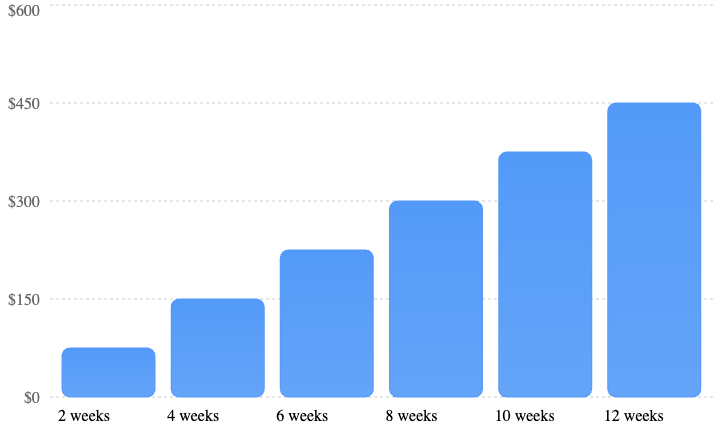
Original loan amount
$500
Fees after six loans
$450
Assumes six consecutive loans of the same amount and fee, where permitted by law.
Over time, repeated borrowing can result in fees approaching or even exceeding the original amount borrowed.
The borrower may continue paying significant fees without making meaningful progress toward improving their financial situation.
Creating a realistic repayment plan before borrowing can help reduce this risk.
Are Payday Loans Legal in the United States?
Payday lending is regulated at both federal and state levels in the United States. However, individual states have considerably different approaches to short-term consumer lending.
Some states permit payday loans subject to specific borrowing limits, fee restrictions and repayment requirements. Others impose interest rate caps that effectively prohibit traditional high-cost payday lending.
Certain states also restrict loan renewals, simultaneous loans and repeated borrowing.
Federal protections include lending disclosure requirements under the Truth in Lending Act. The Military Lending Act also generally limits the military annual percentage rate to 36% for covered active-duty service members and their covered dependents.
Online lenders are not automatically exempt from applicable consumer protection laws simply because they operate through the internet.
Borrowers should consult their state’s financial regulatory authority to determine whether a lender is authorized to operate in their jurisdiction.
Are Online Payday Loans Safe?
The safety of an online payday loan depends on the legitimacy of the lender, its information security practices and the conditions of the lending agreement.
Legitimate lenders should clearly identify their company, provide accessible contact information, disclose borrowing costs and explain repayment obligations before consumers accept an offer.
Warning signs include demands for upfront payments before loan funds are released, requests for gift cards or cryptocurrency, aggressive sales tactics, unclear company ownership and promises of guaranteed approval regardless of financial circumstances.
Borrowers should also be cautious about unsolicited telephone calls, emails and text messages claiming that they have already been approved for loans they never requested.
A professional-looking website alone does not establish that a lender is legitimate.
Checking licensing information and researching the company’s reputation can help consumers avoid fraudulent lending operations.
Can You Get a Payday Loan Without a Job?
Some payday lenders consider applications from individuals who do not have traditional employment but receive regular income from other sources.
Potentially accepted income sources may include retirement benefits, Social Security payments, pensions, disability benefits and self-employment earnings.
Each lender establishes its own income verification requirements, subject to applicable laws.
Individuals without any reliable source of income are unlikely to have a realistic means of repaying a short-term loan. Borrowing under these circumstances can make an already difficult financial situation substantially worse.
Community assistance programs, government benefits and nonprofit financial counseling may provide more appropriate alternatives.
What Happens If You Cannot Repay a Payday Loan?
Failing to repay a payday loan can have several financial consequences. The lender may attempt to collect the outstanding balance, charge legally permitted fees or refer the account to a collection agency.
If an authorized automatic withdrawal fails, the borrower’s bank may also impose applicable fees.
In some circumstances, unpaid debts may be reported to consumer reporting agencies or become the subject of civil legal proceedings.
Borrowers experiencing repayment difficulties should contact their lender as early as possible. Some lenders offer extended payment plans or hardship arrangements, and certain states require lenders to make repayment alternatives available under specified conditions.
Consumers cannot ordinarily be arrested simply because they are unable to repay a consumer loan. Threats of immediate arrest for unpaid payday loan debt may indicate unlawful collection practices or fraud.
Do Payday Loans Affect Your Credit Score?
Payday loans do not always appear on traditional credit reports. Some lenders use specialized consumer reporting agencies rather than the three major credit bureaus.
As a result, successfully repaying a payday loan may not necessarily improve a borrower’s traditional credit score.
However, unpaid payday loan debt can potentially affect creditworthiness if the lender or a collection agency reports the outstanding account to a major credit reporting agency.
Repeated short-term borrowing may also influence future lending decisions when lenders review alternative credit reports or bank account activity.
Consumers looking specifically to build credit may benefit more from secured credit cards, credit-builder loans or other financial products that report positive payment history.
How to Compare Payday Loan Companies
Choosing a payday lender involves more than finding a company that offers fast approval. Borrowers should compare the complete financial obligations associated with each available offer.
The annual percentage rate, total repayment amount, repayment deadline and applicable fees are particularly important. Consumers should also examine whether the lender provides clear information about its licensing status, privacy practices and customer support.
A company offering a slightly larger loan is not necessarily providing a better financial product. Likewise, faster funding does not compensate for unnecessarily expensive borrowing conditions.
Independent consumer reviews may help identify recurring problems involving unexpected charges, poor communication, unauthorized withdrawals or collection practices.
However, reviews should be considered alongside official licensing information and the actual loan agreement.
Alternatives to Payday Loans
Before applying for a payday loan, consumers should investigate whether less expensive financial assistance is available.
Credit unions sometimes offer small-dollar personal loans with considerably lower borrowing costs. Certain federal credit unions also provide payday alternative loans, commonly known as PALs, which are designed to offer members a more affordable short-term borrowing option.
Traditional personal loans, employer paycheck advances and earned wage access services may also be worth investigating, although their fees and eligibility requirements vary.
Consumers facing overdue utility bills, medical expenses or other essential payments may be able to negotiate payment arrangements directly with service providers. Many organizations would rather establish a manageable payment plan than allow an account to remain unpaid.
Local nonprofit organizations, food assistance programs and emergency financial assistance services can sometimes reduce the immediate need to borrow money.
Americans experiencing financial hardship can also visit 211.org to find community assistance programs or consult the Consumer Financial Protection Bureau for information about payday lending and consumer rights.
When Should You Avoid Payday Loans?
Payday loans are generally unsuitable for financing discretionary purchases, vacations, entertainment, gambling or speculative investments.
They are also poorly suited to addressing ongoing financial problems. Someone who consistently spends more than they earn is unlikely to resolve that problem through repeated short-term borrowing.
Borrowers should avoid payday loans when repayment would prevent them from covering essential expenses, when they already have outstanding high-cost debt or when they would need another loan to repay the first one.
A temporary cash shortage and a long-term income shortage are fundamentally different problems. While short-term borrowing may provide temporary access to money, it does not increase a person’s overall income.
Frequently Asked Questions About Payday Loans
Can I get a payday loan with bad credit?
Some payday lenders accept applications from consumers with poor credit histories. Approval depends on income, banking information, lending requirements and applicable state regulations.
Are there guaranteed approval payday loans?
Legitimate lenders generally cannot guarantee approval before evaluating an application. Advertisements promising guaranteed loans should be approached cautiously.
Can I get a payday loan instantly?
Some lenders provide rapid approval decisions and expedited funding. However, identity verification, bank processing times and other factors can delay access to funds.
Can I apply for payday loans 24 hours a day?
Many online lenders accept applications 24 hours a day, seven days a week. This does not necessarily mean that applications will be reviewed or funded immediately.
Can I borrow $500 with a payday loan?
A $500 payday loan may be available depending on the lender, the borrower’s eligibility and state borrowing limits.
Can I get a payday loan without a bank account?
Some storefront lenders may offer alternative payment arrangements. Most online payday lenders require an eligible bank account for electronic funding and repayment.
Can I have more than one payday loan at a time?
This depends on state law and individual lender policies. Some states restrict or prohibit consumers from having multiple outstanding payday loans.
Do payday loans require collateral?
Traditional payday loans are generally unsecured and do not require borrowers to provide physical assets as collateral.
Can I repay a payday loan early?
Many lenders allow early repayment. Whether early repayment reduces borrowing costs depends on the fee structure, loan agreement and applicable regulations.
Are payday loans available on weekends?
Online applications may be available during weekends, but funding depends on lender operations, banking schedules and available payment methods.
Can self-employed people qualify for payday loans?
Some lenders accept self-employment income, provided applicants can demonstrate sufficient and reasonably consistent earnings.
What is the difference between a cash advance and a payday loan?
A payday loan is a specific type of short-term consumer loan. The term cash advance can also refer to credit card cash advances, employer advances and other financial products with different costs and repayment structures.
Can payday loans help build credit?
Payday loans are generally not an effective credit-building tool because many payday lenders do not report successful repayments to the major credit bureaus.
How long do I have to repay a payday loan?
Traditional payday loans are often repayable within two to four weeks. Actual repayment periods depend on the lender, loan agreement and state regulations.
Why are payday loans so expensive?
Payday lenders frequently charge fixed fees over very short borrowing periods. When these fees are expressed as an annual percentage rate, the resulting borrowing cost can be extremely high.
Final Thoughts on Payday Loans
Payday loans offer a form of short-term financing for individuals facing unexpected expenses or temporary cash shortages. Their relatively simple application processes, potentially fast funding and flexible credit requirements explain why many consumers consider them during financial emergencies.
However, convenience comes at a considerable cost. High borrowing fees, short repayment periods and the potential for repeated borrowing make payday loans one of the riskier forms of consumer credit.
Anyone considering a payday loan should compare available alternatives, verify the lender’s legitimacy, understand the complete repayment obligation and determine whether the loan can be repaid without creating another financial emergency.
The most important consideration is not simply how quickly money can be borrowed, but whether repaying that money will leave the borrower in a financially sustainable position.